

In recent years, sensor faucet have gained popularity due to their convenience, hygiene benefits, and water-saving capabilities. Among the many options available, two primary types of sensor faucets stand out: battery-powered and mains-powered models. Both offer unique advantages depending on their application, and understanding the differences between them can help you choose the right one for your needs.
Battery-Powered Sensor Faucets are ideal for places where access to a direct power source may be limited or inconvenient. This makes them a popular choice for residential settings, particularly in bathrooms where installing electrical wiring may not be practical. The ease of installation and flexibility in placement are significant benefits of battery-operated sensor faucet tap. Since they are not dependent on a mains power supply, these faucets can be installed in remote locations like guest bathrooms, portable restrooms, or even outdoor settings where access to electrical outlets is scarce. Moreover, battery-powered sensors are typically easier to install without requiring professional assistance, making them a cost-effective and hassle-free solution.
On the other hand, mains-powered sensor faucets are well-suited for commercial environments, where high-traffic usage and long-term reliability are essential. In businesses such as restaurants, hospitals, and office buildings, a continuous water supply is necessary, and the sensor faucet needs to perform consistently without interruptions. These faucets are connected directly to the electrical grid, ensuring they never run out of power, unlike their battery-powered counterparts. This is particularly advantageous in high-use areas where the frequency of battery changes in a sensor tap could become a maintenance issue. Additionally, mains-powered models are often more energy-efficient for these high-traffic locations, as they don't require the regular battery replacements that can lead to waste and added costs.
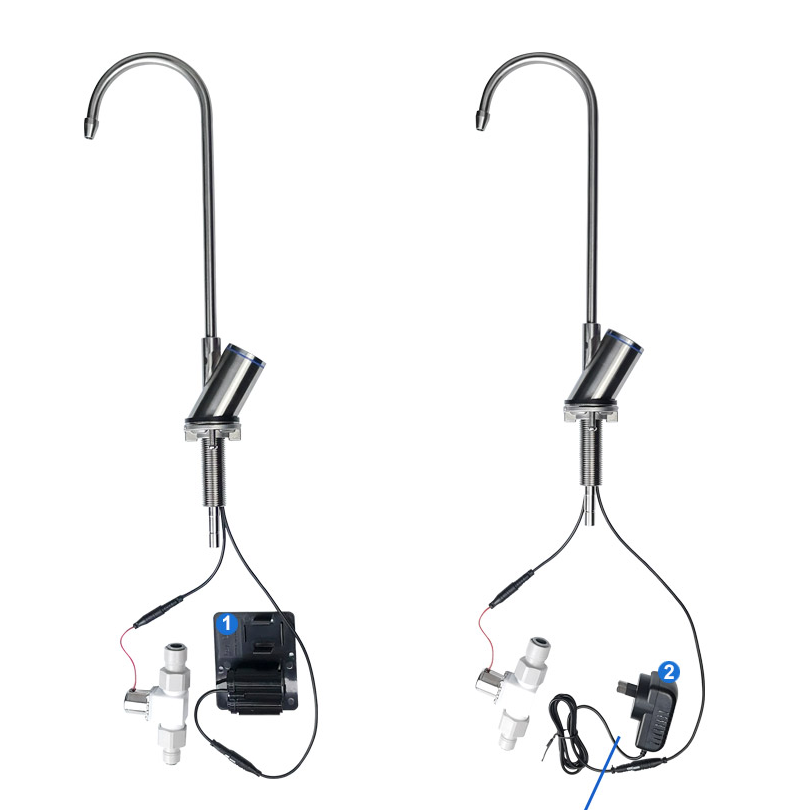
In terms of overall convenience, mains-powered sensor faucets provide the benefit of longer operational lifespans, with a more consistent water flow and minimal downtime. For establishments that require high-performance and long-term use, a mains-powered model is often the more reliable option.
In conclusion, the choice between a battery-powered sensor faucet and a mains-powered sensor faucet depends on the application. While battery-powered options are perfect for residential spaces or locations without easy access to electrical power, mains-powered models are ideal for businesses where continuous operation and minimal maintenance are top priorities.